Man Oh Manatee

Last week at the Fisher Island, FL marina,  a group of people were clustered around a man holding a hose. I assumed he was washing his boat. Not so fast. Down below in the water were a mother and baby manatee, both reveling in a long drink of  fresh water and a snack of lettuce. Both Mom and the youngster (probably three-quarters grown) had nasty scars on their bodies from run-ins with boat propellers. Up close and personal, the most impressive things about manatees is their enormous size, (an adult can easily weigh over a ton), and the way their  nostrils open when they take a breath.

A few nights later, we had dinner at Red Light Little River, a restaurant on Biscayne Bay in Miami. The service is laid-back –putting it mildly–  the food creative and the prices friendly.  You enter upstairs into what looks like diner but the nicer area to eat in is a patio overlooking Miami’s (very dirty) Little River that gets more attractive as the sun goes down.  Although a sign announces that the river is a manatee area, the only evidence we saw were occasional  bubbles.

Red Light–so named because it’s adjacent to what may be a hot sheet haven, (Motel Blu no less!) is also pretty hot thanks to chef and owner Kris Wessel who hails from New Orleans. Our party of three greatly enjoyed the BBQ shrimp with dipping bread, stuffed artichoke, fish creole and dry-rubbed ribs, in fact, one of us voted the ribs the best he’d ever eaten.

Dry Rubbed Ribs with Apple Slaw -Red Light, Miami

Too bad we couldn’t have tried the famed oyster pie but it would have taken a minimum of twenty-five minutes to prepare and we were too  hungry.

Since I couldn’t get Red Light to share the recipe, here’s a take on a barbeque sauce I’ve made.

Coffee Barbecue Sauce (Sometimes referred to as Dark and Stormy BBQ Sauce)

1/2 c brewed strong, dark coffee
1 c ketchup
1/2 c cider vinegar
1/2 c firmly packed light brown sugar
1 Spanish onion, peeled and finely chopped, about 1 c
1-2 cloves garlic, peeled and crushed
2 tbls Worcestershire sauce

(Note: some versions call for two or three jalepeno peppers crushed and added to the sauce. I’ve never done this.)

Preparation:
Place all ingredients in a small sauce pot, stir together and bring to a simmer over medium-high heat. Place on the lowest heat so the mixture is just simmering. Allow to simmer for 20 minutes. Remove the sauce pot from the heat and allow tit to cool.  Baste ribs with sauce while cooking (ideally on an outdoor grill) and serve any left over sauce on the side. Don’t forget lots of paper napkins!

Posted in Uncategorized | Tagged , , , | 1 Comment

Eat Dessert First

If you want to eat genuine Sachertorte, the dense, chocolate cake with apricot jam between the two layers and a hard, shiny chocolate frosting, you’ll have to go to Vienna, Salzburg or order it online, (because other recipes aren’t considered “authentic.”)  I enjoyed Sachertorte in Vienna at both Hotel Sacher and Hotel Demel. A huge bro-ha-ha over which place had a right to bill its pastry as the “original” went on for years, finally ending in a nod to the Hotel Sacher but frankly, I couldn’t tell much difference. Regardless, it’s a classic, typically served with unsweetened whipped cream.

Baklava is another classic dessert with infighting about where it came from. In the U.S., it’s often too sweet but in Turkey and Greece, two of the countries claiming “ownership,” far less so.  Many ethnic groups of the Ottoman Empire and central Asia — Greeks, Turks, Armenians, Lebanese and Iranians, among others–say they originated baklava. The sweet can be served topped with chopped pistachio nuts or a single walnut; eaten on special holidays or at any time; incorporate rose water and/or cardamom; be cut into triangles or squares, etc. The Greeks developed the technique to roll the dough as thin as a leaf; in fact, the word”phyllo” means “leaf” in Greek. In the right setting with a cup of medium sweet Turkish coffee, baklava can be the perfect end to a meal.    (I hear you saying that drinking Turkish coffee is like sipping mud.  Avoid the dregs and it’s delicious.)

Peach Melba

Peach Melba was created about 1862 by French chef August Escoffier at the Hotel Savoy in London to honor Australian soprano Dame Nellie Melba (a lot of the world in one dessert.) Legend has it that Dame Nellie adored ice cream but didn’t eat it often, fearing the cold would harm her delicate vocal cords. Since the dessert also contains peaches and raspberry sauce, it wasn’t considered as vocally dangerous and permitted Dame Nellie to indulge. This photo shows Peach Melba served in a coup, a glass dish with a stem that supposedly keeps the ice cream cold longer.

If you can make raspberry sauce, you can make a fine Peach Melba. Here’s a recipe courtesy of my friend, art writer, Elizabeth Wilson.

Raspberry Sauce, Elizabeth Wilson

2 cups raspberries

1/2 cup confectioners sugar

1 T lemon juice

1 T cornstarch

Put berries in saucepan, add sugar and stir over medium heat stir until mixture starts to bubble. Reduce heat to very low.

In a separate bowl, add 1 T. cornstarch to 2 T. of the raspberry mixture, stirring to combine well. Dump it back into the main mixture and heat over medium until mixture boils and begins to thicken. Cool off heat.  Add lemon juice and stir again.  The sauce keeps for several days.

Mother Myrick’s, a dessert and candy shop in Manchester, VT, uses an old quote as its slogan: Life is Short; Eat Dessert First. Writer and wit Erma Bombeck said something like “Never refuse dessert. Think about those women on the Titanic who waved away the dessert cart.”

Posted in Uncategorized | Tagged , , , , , , , | 3 Comments

Lobster Lessons

I learned how to eat lobster when I was five, on the dock of our rented house on one of the  Belgrade Lakes in Maine. A weekend guest saw me struggling and took me aside.

“Don’t worry about anything but enjoying it,” he suggested. “It’s messy but that’s how you get to eat every single, delicious part.” With that, he helped me use a nutcracker to get the meat from the claws; showed me how to pull the long, skinny “legs”off and suck the meat out and get at and eat the green “tomalley” from the underside (males have this; females have coral or roe.) Hard core lobster-eaters don’t miss an inch. To this day, I prefer lobster eaten outdoors accompanied by melted butter, stacks of paper napkins and no one asking “how can you eat that disgusting green stuff?”

These are other lobster memories:

1. My uncle, an executive in the music business, had seven or eight licensed lobster “pots” in Long Island Sound in front of his house in Old Greenwich, CT.  When he thought there might be prizes in the pots, he’d row out and pull them up, tossing back any crustaceans that were undersized or not legal in other ways. I went along a few times and gained a new appreciation for commercial lobstermen–it’s a lot of work.

Lobster Pot

2. An inventive friend invited me and my young  daughters to join her and her three girls  for the day. She was planning lobster salad for a large crowd and had stored the crustaceans in her fridge.

“We’re having a lobster race” she told the girls. She handed each kid a wooden spoon, drew a starting line and put the lobsters on it. We rooted for our favorites, the girls pushing their choices forward towards the finish line with their spoons, everyone roaring with laughter.  It was great fun if you don’t count feeling a little like a Roman cheering for gladiators vs. lions.

3.  We were spending a few weeks at Corn Hill, Truro on Cape Cod.  I’d taken my six-year old daughter to buy lobsters which the fish seller put into a large paper bag and tossed into the car next to her. Driving home, my daughter screamed “Mommy,” it’s coming after me.” I pulled over. One lobster claw was out of the bag, waving in her direction. I stuffed it back in, calmed the child and drove home as speedily as possible. When it came time to start dinner, it was not easy tossing live food into boiling water. Not easy, mind you, but I did it (as husband muttered “murderer” under his breath but didn’t decline dinner.)

Corn Hill Beach, Truro, MA.

Maine Lobster Roll

  • 4  cups  cooked lobster meat, cut into bite-size pieces
  • 1/2  cup  mayonnaise
  • 1/4  cup  chopped green onions (or omit if you don’t like onion in your roll)
  • 1  tablespoon  chopped celery
  • 1  tablespoon  fresh lemon juice
  • 1/2  teaspoon  salt
  • 4  toasted hot dog buns

Combine first 7 ingredients. Spoon 3/4 cup salad into each bun.

There are a zillion places to eat lobster rolls all over Maine (and elsewhere in New England). Red’s Lobster Shack in Wiscasset is one of the best. When it opens for lunch, there’s a line and traffic stops. Get out those napkins!

Posted in Uncategorized | Tagged , | 1 Comment

In a Jam in Maine

Stuart Little

Brooklin, ME, is a tiny town that was  home to E. B. and Katharine White who met at The New Yorker, ultimately moved to Maine and were married for forty-eight years.  Visiting Brooklin, we went to the Friend Memorial Library to see the E. B. White book collection and noted with pleasure that the volumes look used and appreciated.   The Stuart Little book jacket above is the version I adored, as a child. Every time I went to the 79th Street boat pond, I half-expected to see Stuart at the helm of his craft.

After Brooklin, we went to Stonington and then to Deer Isle, accessible by bridge but somehow suspended in another time, maybe the  50s.We drove down the Sunshine Road (no kidding) got out of the car and stumbled onto what looked like a Red Grooms set—large sculptures everywhere, some sitting on a cabin porch.  Then we came to a cottage/coffee shop where we ate wonderful scones accompanied by samples of some of the jams.  The place is so low-key,  it took a while to figure out that one function of the cottage is a “showroom” for the small batch jams, preserves, chutneys and marmalades made under the Nervous Nellie label.

In life, Nellie is delightful Anne Beerits.  The company name and identity were coined twenty-five years ago by Peter, Anne’s partner, who thought Nervous Nellie’s was a better name for a  fledgling jam business than Deer Isle Jams. How right he was! Here’s the web address  for the company  where you can simply browse, order fabulous jam and chutneys, pottery, teas or organic dog biscuits; read Nellie’s blog, sign up for the Nellie newsletter or see some of Peter’s creative sculpture, much of it made from reclaimed materials:  www.nervousnellies.com/

All the products I’ve sampled are first class but my personal fave remains the Hot Tomato Chutney. Simultaneously spicy and sweet, it’s a great accompaniment to any meat, enlivens a sandwich, and becomes a great hors d’oeuvre– top a cracker with cream cheese or cheddar and add a dollop of the chutney.

Nervous Nellie catalogue

Use any of the chutneys  on a meat sandwich instead of mustard or mayonnaise  or enliven mayo with one and thin further with plain yogurt.  Flavor yogurt with Blueberry Chutney and spread on pork tenderloin for the last few minutes of cooking– your mouth and your guests if you share– will thank you.  Visit Nervous Nellie’s (open year ’round but I prefer Maine in the summer) have a snack, go birdwatching,  and enjoy a unique place that produces top-quality food products  with flair and humor.

For a recipe, check out Nellie’s website that lists a bunch of suggestions on using their products.

Posted in Uncategorized | 2 Comments

Tiptoe Through the Tulips

This amazing photograph,(which I would credit if I knew who shot it), looks like a fabulous carpet or maybe a contemporary abstract painting.  In actuality, it’s an aerial perspective of tulip fields in Holland.

Tulips were popular at the court of Suleiman the Magnificent, Sultan of the great Ottoman Empire from 1520 to 1566, when the Ottoman empire reached from Tripoli  to the Persian Gulf to Hungary.   An ambassador to Austrian Emperor Ferdinand the First saw tulips in the course of his travels and brought a collection of bulbs and seeds to Vienna for his friend Carolus Clusius, Prefect of the Imperial Herb Garden. Besides nurturing the Dutch tulip industry,  Clusius, born in Arras, France, where he was known as  Charles De L’Ecluse, also  developed the potato and chestnut.

Parts of the tulip are edible if they haven’t been in any way involved with pesticides.  During WWII, some starving Dutch ate bread made of the dried blooms ground into powder and baked. According to a report, the bread “tasted like wet sawdust.” Not very appealing.

More delightful is contemplating a beautiful flower like this Flamboyant Parrot Tulip, one of the more than 3000 different kinds of registered cultivated tulips.

Tulips aren’t on the menu but nasturtiums can be. Both the leaves and flowers are edible with a peppery tang that jazzes up salads.  If you have a garden, think about  planting some nasturtiums this year (assuming spring and summer ever come). Nasturtiums are cheerful and have the bonus of being a great salad addition.

Nasturtium Salad (from Kit Healthcock)

1 lettuce – iceberg, butter or cos
1 small bunch of nasturtiums –both leaves and flowers (If you grow them you can be sure they haven’t been sprayed with pesticides)
2 good-sized ripe tomatoes
1 tablespoon capers
feta cheese

Wash and dry the lettuce and tear into the size pieces you prefer. Rinse the nasturtium leaves, and tear or chop into rough strips. Half small tomatoes;  chop bigger ones into cubes. Cube the feta cheese and sprinkle over the salad with the capers. Top with the whole flowers and maybe one or two whole leaves. This unusual salad is is great as a side to  pizza, cold meats or as a first course. If the idea of eating flowers bothers you, substitute watercress and you’ll get more or less the same taste although the salad won’t be as pretty (or get as many comments!)

Nasturtium

Posted in Uncategorized | Tagged , , , | 4 Comments

X Marks the Spot

Basque sign

The official language of the Basque country of northern Spain and nearby France is Euskara, rife with x’s and z’s. (Look at the sign above: the only obvious words are “San Sebastian,” the city.)

In Euskara, what I knew as ‘tapas’ are called pinxtos, pronounced “peenchos” and eating them is one of the national pastimes. Pinxtos can be simple, cold bites like olives and a slice of cheese or more complex hot snacks such as Tortilla Espanola,  an omelet laced with diced potato and chorizo. When you order a drink, it often comes with a simple pinxto on a plate (and one of the itsy-bitsy waxed Spanish napkins that don’t mop up anything.)

‘Tapa’ means ‘lid’ or cover in Spanish. Legend has it that long ago an enterprising barkeep covered a drink to keep off flies, using a piece of ham or bread.  Over time, the custom  evolved into a snack to accompany a drink.  Going ‘tapas hopping’ before the late Spanish dinner or lunch on weekends is very popular. Eating several substantial –you say tapas and I say pinxtos– at eight or nine at night along with ample sherry or wine often killed my need for a real dinner later.

Hondarribia, a former fishing village on Spain’s eastern coast, has a street entirely devoted to bars offering pinxtos. Nibbling along the street from bar to bar,  having a pinxto there, another here was fun. Afterward, we walked up the hill to the parador,  a treat itself as the hotel was originally a tenth century castle.

A few days later we moved on to a parador in easy driving range of both San Sebastian, pinxto heaven, and Bilbao. The Guggenheim museum in Bilbao was between exhibits but the monumental  work by Richard Serra is always on view and the building itself is incredible. So too were the designer pinxtos at the museum’s restaurant.

Guggenheim Museum, Bilbao

The easiest recipe for tapas/pinxtos I can think of is top quality bread, brushed with Spanish olive oil and topped with a slice of  Jamon Iberico.  Despana, a restaurant-cum-grocery store on New York’s Broome Street in Soho, sells terrific jamon as well as Spanish cheeses and other foods.  Many people eating there  are chatting away in Spanish; everyone I asked gave the place high marks.  Call them tapas or pinxtos—when in Spain (or at a real tapas bar elsewhere) just enjoy them.

Jamon Iberico at Despana

Tapas

Posted in Uncategorized | 5 Comments

Let’s Hear It for World Nutella Day

Somehow, February 5, National Nutella Day, slipped past my radar.  Nutella, for those who have avoided it either unknowingly or deliberately, is the chocolate/hazelnut spread  created by Pietro Ferrero in the early 1940s when there was very little chocolate available because  0f WWII rationing.

In its earliest form, Nutella was known as pasta gianduja, from Gianduja, a marionette character from the Italian area of Piedmont where sweets made from hazelnuts were, and probably still are, popular. Pasta gianduja was originally formed into loaves that could be sliced as a sandwich ingredient for kids. (As a child, once in a while I was given buttered bread with a hunk of chocolate as a snack. What did you get?)

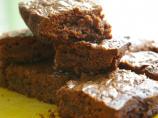
Last February,  a colleague stopped at my office door holding a tin. “Have a brownie,” she said. I demurred. She insisted, explaining that this was a brownie unlike others. Finally I gave in. One bite and I saw the light. That’s when she clued me into World Nutella Day, a cheerier  occasion than say, National Tsunami Awareness Week, celebrated from March 27-April 2 — apologies to anyone with in any way involved with tsunamis. My colleague then  shared her recipe. Give Nutella brownies a shot and watch them disappear.

Nutella Brownies

Nutella Brownies

adapted from Ricardo Magazine, Winter 2008 ( with thanks to Lyn Osborne)

1/2 cup unbleached all-purpose flour
1/4 teaspoon salt
2 eggs
1 cup Nutella
1/2 cup brown sugar
1 teaspoon vanilla extract
1/2 cup melted unsalted butter, cooled slightly

Preheat oven to 325F. Line the bottom of an 8 inch square pan with parchment paper, letting the paper extend over the two sides.  Butter the other two sides. In a bowl, combine  flour and salt. Set aside. In another bowl, beat the eggs, Nutella, brown sugar and vanilla extract with a mixer until smooth. With the mixer on low speed, add the flour mixture and melted butter, alternating between the two. Scrape the batter into the cake pan. Bake until a toothpick inserted into the center comes out clean with at most a few crumbs attached. about 35-40 minutes. Cool in the pan for about 2 hours, unmould and cut into squares. Makes about 16 brownies.

If you want a more pronounced hazelnut taste, chop some hazelnuts and sprinkle over the top. With or without, you won’t have brownies left for long.

Posted in Uncategorized | Tagged , , , | 4 Comments

Take the Vinyasa of Your Choice

Downward Facing Dog

The first time I heard the title phrase, visions of condiments danced in my head as though  I’d been offered garnishes for a curry. Not quite. I was a newbie in a yoga class, dazzled by the lithe, twenty-something instructor with rubber joints. (For non-yoga practitioners, a vinyasa is a series of poses starting and ending with a downward facing dog, pictured above. A “good dog” is not a well-behaved Lab, it involves spread fingers and toes, limber hamstrings and steady in- and exhalations. My dog is  not all that good but very game.)

Since the condiment class, I’ve taken yoga classes on beaches, in gyms and spas, in living rooms,  at home and far away.  India, birthplace of yoga, has classes everywhere. In  many temples like the Meenakshi Temple in Madurai,  in the south Indian state of Tamil Nadu, there are impromptu yoga groups scattered about the huge complex.  If the practitioners were aware that people like me watched for a few moments, they didn’t pay the slightest heed.

Meenakshi Temple, Madurai

In the U.S., the public posture of yoga devotees is often includes healthy eating.  If practitioners snarf up Big Macs, they don’t say so nor do their lean bodies.  Lentils are a protein dream, third only to soybeans and hemp seed (anyone ever eaten hemp seed?)

Here’s a recipe for lentils with leeks that I’ve used as a base for salmon  It’s delicious on its own and you can use it any way you please. Namaste.

Lentils with leeks

For mustard-herb butter:

3 Tbls. unsalted butter, softened

1 Tbls grainy mustard (like Dijon)

1 teaspoon fresh lemon juice

1 Tbls each chopped chives and tarragon (if you have them handy, taste is still good if you don’t)

For lentils and leeks:

1 cup French green lentils

4 cups water

2 leeks (white and pale green parts) chopped and well-washed

1 Tbls. unsalted butter

1 Tbls. fresh lemon juice

Bring lentils, water and 3/4 teaspoon salt to a boil in a heavy saucepan, then reduce heat and simmer, uncovered until lentils are just tender, about 20 minutes. Remove from heat and let stand five minutes. Reserve one cup cooking liquid and drain the rest.

Chop leeks, wash and cook in a tablespoon of butter over medium-low heat, stirring a little until softened, 6-8 minutes. Add lentils with the reserved cooking liquid to the leeks and add the 3 Tbls. mustard-herb butter until lentils are heated through and butter has melted. Add the lemon juice and salt and pepper to taste.  Serve under cooked salmon for the classic French Saumon aux Lentilles–or not.  Like yoga, it’s about you.

Posted in Uncategorized | 2 Comments

Hail to the Chef

Chefs?

My friend, Arline, is to ordinary household cooks as Hollandaise sauce is to Heinz. What better birthday tribute for her than a cook-a-thon with friends and family at the Institute of Culinary Education? For travel,  think a trip to NYC’s West 23rd Street.

Before the party, invitees emailed photos and recipes that were bound into a album.  On the big night, after toques and aprons were distributed, we assembled in the ICE kitchen to cook our dinner with assistance from the charming, helpful  staff. My group  made Tarte Flambe with Ricotta, Onions and Bacon;

Tarte with Frisee Salad

another dealt with Pecan- crusted Beef Tenderloin with Port Reduction accompanied by  Herbed Spaetzle and Maple-roasted Brussel Sprouts while a third table worked on Chocolate Bread Pudding with Rum Sabayon sauce.

Searing Beef Filet

Much of the pre-prep work was done by the school’s staff, i.e, we the tarte team got crisp bacon and pastry in sheets. There was still plenty of  actual cooking:  onions  to dice and sautee; puff pastry to prick, load with layered ingredients and bake; spaetzle to make from scratch. The beef team flamed; the bread pudding confab cracked and beat eggs before mixing them with milk, additional egg yolks and brown sugar, never mind the tension of removing the puddings from the ramekins. Everyone got high marks for “works and plays well with others.”

Flaming Filet

Cooking in a professional kitchen isn’t quite like at home–most of us don’t have always-sharp knives like ICE, nor  dozens of spotless prep boards or several multi-burner ranges (or a clean-up  crew!)  When we sat down to enjoy the feast, we toasted Chef Arline, everyone at ICE and ourselves for a delicious dinner and a terrific evening.

Arline Separates Eggs

When I cook any of these recipes again, I’ll have to manage solo and will miss both the camaraderie and having soiled utensils whisked away.

Pecan-Crusted Beef Tenderloin with Port Reduction (4 servings)

For the crust: 1/2 cup toasted pecans, 1/4 cup bread crumbs, 2 Tbls. melted butter, 1 Tbls. minced parsley.

For the beef: 4 filet mignons, 6-8 oz. each; canola oil; salt and pepper

For the sauce: 1/2 shallot, peeled and minced; 1 1/2 cups ruby port; 1 1/2 cup veal stock; 1 tsp red wine vinegar; 1 tsp. sugar; 2 Tbls. butter

1.Place pecans in food processor and pulse until fine. Add rest of crust ingredients and pulse briefly to combine. Season with salt and pepper and set aside.

2. Heat oven to 400. Warm a large saute pan over high heat. Add enough canola oil to lightly cover bottom of the pan. Season filets with salt and pepper. Place filets in pan and sear 2-3 minutes per side. Place filets on a sheet tray and top with pecan crust. Finish filets in the oven just before serving, 10-12 minutes for medium rare.

3.Pour off excess oil from pan and discard. Add shallots to what is left and cook briefly, 1-2 minutes over medium heat. Deglaze pan with port and reduce the wine by half. Add veal stock, vinegar and sugar. Simmer sauce until it has velvety consistency. Whisk in butter and season with salt and pepper.

And this, friends, is why one entry in the group recipe book called for a single ingredient: a telephone with which to make a dinner reservation. Bon appetite!

Posted in Uncategorized | Tagged , , , , | 4 Comments

Don’t Cry for Me (in) Argentina

“Mendoza now is like Napa Valley  was thirty years ago, ” I was repeatedly told.  Since my last visit to Napa was a good ten years ago,  I can’t compare the two but, overall, Argentina’s Mendoza, the main  wine-growing area,  isn’t nearly as slick as Napa–which is just fine.  This is not true of Familia Zuccardi, a very upmarket, stylish bodega (vineyard) that produces great wines and serves wonderful food.

Familia Zuccardi is in Maipu, about a thirty-five minute drive from Mendoza. (Note to travellers: stay in the wine area, not Mendoza City itself. ) FZ produces and markets a number of wines including those under the  Zuccardi label;  some as Santa Julia, named for a Zuccardi daughter; Malmado, a port wine and others.

We arrived, accepted glasses of the house sparkling wine and browsed the excellent work in the art gallery-cum-reception area before Francisco, our guide, took us to visit the aging wines–and, of course, sample them. In each area, Francisco opened a spout to pour from enormous barrels and stainless steel tanks into our glasses. We tossed whatever we didn’t care to finish  into the floor gutters.  At other (dark) bodegas, we’d been told that wine needs to mature in as little light as possible. Francisco said this was totally unnecessary, which makes sense since it’s already dark inside the barrels and tanks.  (Readers, if I’m wrong, I’d love to know.)

We walked through the vineyards admiring the labels on each type of grape, until it was time for lunch. The dining rooms walls are glass, the better to admire the view of the snow-capped Andes.

Lunch for two cost roughly $70. We began with an amuse bouche of toasts topped with what was described as “mayonnaise” but has nothing to do  with Hellman’s, accompanied by Santa Julia Reserva Blanco. The bread service included a sort of focaccia, an olive loaf and a white bread with a flight of house pressed olive oils,  the last one so dense it had a green, grassy taste. Next up, three empanadas, one filled with cheese, one with meat and the last and best, with onion. At that point, our waiter suggested we switch to red wine, again the Santa Julia Reserva. I picked Malbec; my husband opted for a Syrah.

The heavy lifting started with the asado, or barbecue that began with sausages, one of pork, the other a fabulous blood sausage.This was followed by meltingly tender steak or beef ribs or both.

I’m not a big meat eater but kept going because it was so good. Then came pork or chicken with chimichurri sauce made of parsley, olive oil , garlic and  red pepper flakes. Dessert was a dense chocolate pavane topped with coconut ice cream, served with a sauce of reduced peach and one of reduced port. Coffee and tiny cookies ended the feast, the only course not bathed in wine.

The meal lasted several hours and left us unable to do anything once we got back to our hotel other than lie on the bed digesting.  Familia Zuccardi gets high marks for professionalism and style although  many other vineyards to also produce excellent wines and organize informative tours. If you visit the area, take some time off from wine to visit an olive oil “factory” like Laur.  Olive oil trivia: even the pits are recycled as fuel.

Chimichurri Sauce

  • 1 1/2 cups firmly packed fresh flat-leaf parsley, trimmed of thick stems

  • 4-6 garlic cloves (I use less but that’s personal)

  • 3 Tbsps fresh oregano leaves

  • 3 Tbsp red or white wine vinegar

  • 3/4 cup olive oil

  • 1 1/2 teaspoon sea salt

  • 1/2 teaspoon red pepper flakes

  • 1/4 teaspoon freshly ground black pepper

Finely chop the parsley, garlic and oregano (can use a food processor),  and place in a small bowl. Stir in the vinegar, oil, salt, pepper, and red pepper flakes.  Argentinians serve this with steak but it would work with any grilled meat.  Keeps, covered, in refrigerator for a week.

Credit where it’s due: many thanks to Jake Sheppard,  techno- extraordinaire, for the blog’s new banner.

Posted in Uncategorized | Tagged , , , , | 3 Comments